

Self-Balancing Technology Market to Reach US$ 18.2 Bn by 2033, Growing at a 16.9% CAGR | Persistence Market Research
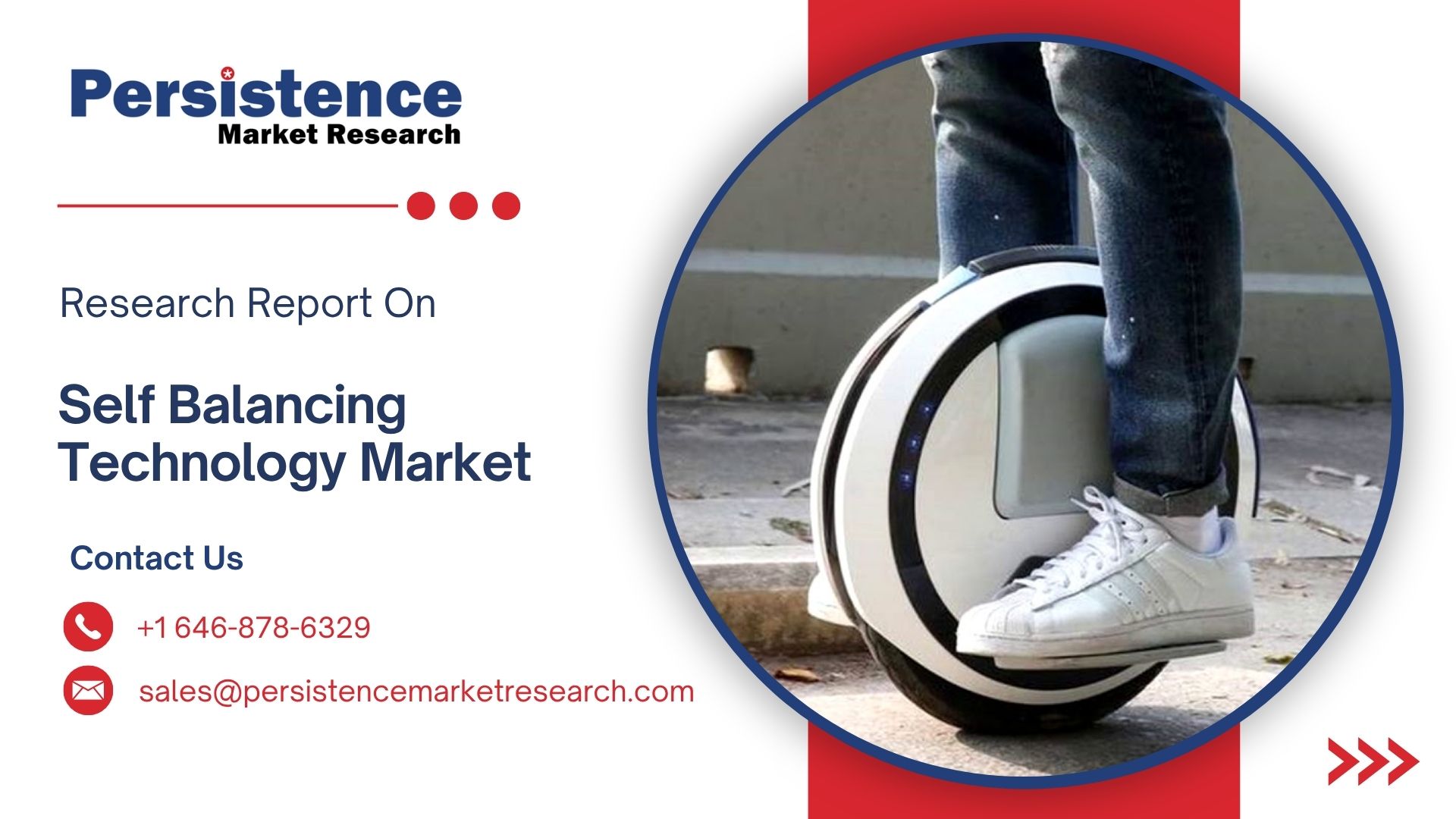
Self Balancing Technology Market
Global self balancing technology market accelerates with smart mobility, AI-driven stability, and innovations in personal and industrial transport.
BRENTFORD, LONDON, UNITED KINGDOM, April 1, 2026 /EINPresswire.com/ -- The global self balancing technology market is on a strong growth trajectory, reflecting the rising demand for innovative mobility solutions and advancements in automation and sensor technologies. The market is expected to reach US$ 6.1 billion in 2026 and expand to US$ 18.2 billion by 2033, registering a CAGR of 16.9% during the forecast period from 2026 to 2033.
Several factors are driving this rapid growth. Urbanization and traffic congestion are fueling the adoption of compact, eco-friendly personal mobility devices, including self balancing scooters, electric unicycles, and autonomous delivery robots. Rising environmental awareness and government initiatives promoting low-emission transportation further accelerate adoption. Technological advancements in battery efficiency, gyroscopic sensors, and AI-powered stability algorithms have enhanced safety, reliability, and performance, making self balancing solutions increasingly viable for both personal and commercial applications.
The integration of AI, IoT, and connectivity solutions has also expanded the utility of self balancing technology beyond personal mobility to logistics, warehousing, and industrial robotics. This convergence of technology and mobility is creating new market opportunities and redefining urban transportation and automation landscapes.
Get Free Sample Now: https://www.persistencemarketresearch.com/samples/34173
Key Highlights from the Report
➤ Market Valuation: The global self balancing technology market is projected to grow from US$ 6.1 billion in 2026 to US$ 18.2 billion by 2033, at a CAGR of 16.9%.
➤ Rising urbanization and demand for micro-mobility solutions are boosting market adoption worldwide.
➤ Technological advancements in sensors, AI, and battery systems enhance safety, efficiency, and user experience.
➤ Government incentives and eco-friendly transportation policies are accelerating market growth.
➤ Increasing applications in logistics, last-mile delivery, and industrial automation provide new revenue streams.
➤ Strategic partnerships and product innovations by leading players are intensifying competition and expanding market reach.
Market Segmentation
By Product Type
• Double-Wheeled
• Unicycle
• Others
By Balance Mechanism
• Active Mass Control
• Control Momentum Gyros
• Reaction Wheels
By End-user Application
• Personal
• Commercial
• Security & Patrol
By Region
• North America
• Europe
• East Asia
• South Asia & Oceania
• Middle East & Africa
• Latin America
Request For Customization: https://www.persistencemarketresearch.com/request-customization/34173
Regional Insights
North America and Europe are currently the leading regions in self balancing technology adoption, driven by high disposable incomes, technological awareness, and supportive regulatory frameworks. Asia-Pacific is projected to be the fastest-growing region, fueled by rapid urbanization, increasing e-commerce penetration, and government initiatives promoting eco-friendly mobility. Countries such as China, Japan, and South Korea are witnessing strong demand for personal mobility devices, autonomous delivery robots, and industrial automation platforms. Urban infrastructure developments, including smart city initiatives, further enhance market potential in the region.
Unique Features and Innovations in the Market
Modern self balancing technologies differentiate themselves through advanced stability algorithms, AI-assisted navigation, and IoT integration. Unlike traditional electric scooters or robots, self balancing devices automatically adjust their orientation, providing superior safety and user comfort. Innovations include adaptive speed control, obstacle avoidance, autonomous delivery routing, and energy-efficient propulsion systems. Integration with AI and 5G connectivity enables real-time monitoring, fleet optimization, and predictive maintenance, allowing commercial and industrial users to maximize productivity while reducing operational risks.
Market Highlights
Industries and consumers are increasingly adopting self balancing technology to address urban mobility challenges, reduce carbon emissions, and improve operational efficiency. Governments are supporting adoption through eco-friendly transportation policies, subsidies, and safety regulations. Businesses benefit from cost-effective automation solutions that reduce labor dependency and enhance precision in logistics and warehouse operations. Additionally, collaboration between manufacturers, technology providers, and service operators is driving innovation in autonomous capabilities, connectivity features, and product design, further accelerating market growth.
Key Players and Competitive Landscape
The self balancing technology market features established players and innovative startups focused on mobility and industrial automation. Leading companies include:
✦ Segway-Ninebot – Pioneering personal mobility solutions and commercial robots, emphasizing AI-driven stability and global market expansion.
✦ Razor USA – Innovating recreational self balancing scooters with advanced safety and ergonomic features for consumers.
✦ Inventist – Focused on one-wheel electric vehicles, enhancing urban commuting with compact, high-performance solutions.
✦ Ninebot (by Xiaomi) – Expanding product lines for personal mobility and logistics robotics with IoT-enabled connectivity and AI-assisted control.
✦ Future Motion – Developer of self balancing personal transport devices with smart app integration and autonomous capabilities.
✦ Segway Robotics – Provides autonomous self balancing platforms for industrial and warehouse automation, combining safety, reliability, and AI-based navigation.
Buy Now: https://www.persistencemarketresearch.com/checkout/34173
Recent Developments
• Segway-Ninebot launched a next-generation autonomous delivery robot with enhanced AI navigation and improved battery efficiency in 2025.
• Future Motion introduced a smart one-wheel electric vehicle with IoT-enabled fleet management and adaptive stability features for urban commuters.
Future Opportunities and Growth Prospects
The self balancing technology market is expected to continue expanding due to urbanization, sustainability goals, and technological advancements. Future growth opportunities include the development of lightweight, energy-efficient vehicles, autonomous delivery systems, and AI-driven fleet management solutions. Increasing adoption of 5G and IoT technologies will enhance real-time monitoring, predictive maintenance, and operational efficiency.
Emerging applications in industrial automation, last-mile logistics, and urban mobility offer significant revenue potential. As governments prioritize eco-friendly transport solutions and regulatory frameworks evolve to support autonomous and connected devices, self balancing technology is poised to play a pivotal role in transforming personal mobility, industrial automation, and urban transportation globally.
Explore the Latest Trending Research Reports:
• Automotive Remote Diagnostics Market
• Automotive Exhaust Systems Market
Persistence Market Research
Persistence Market Research Pvt Ltd
+1 646-878-6329
email us here
Visit us on social media:
LinkedIn
Instagram
Facebook
YouTube
X
Legal Disclaimer:
EIN Presswire provides this news content "as is" without warranty of any kind. We do not accept any responsibility or liability for the accuracy, content, images, videos, licenses, completeness, legality, or reliability of the information contained in this article. If you have any complaints or copyright issues related to this article, kindly contact the author above.
